How A North Carolina Mom Turned A Passion For Farming Into A Family Oyster Business
By Tara Massouleh McCay | Published on October 19, 2026 | Reprinted from Southern Living Magazine
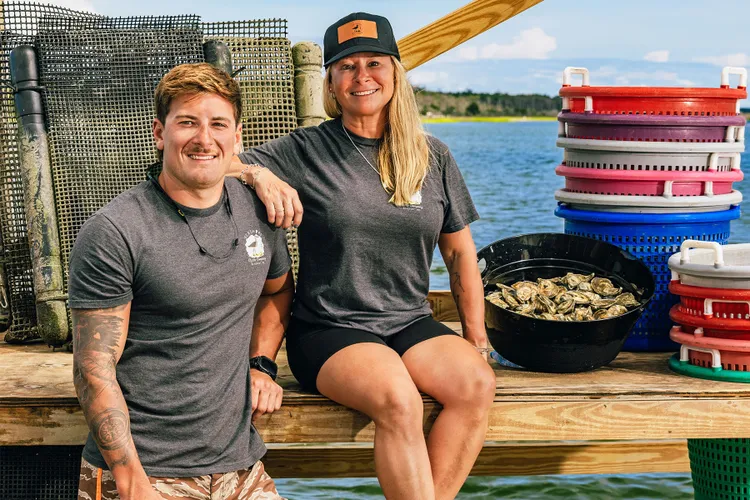
Max Cloutier and Nancy Dupuis own and operate Seashore Oyster Co.
Credit: Baxter Miller
“I’ve always been fascinated by the farming process,” says Nancy Dupuis, who grew up raising pigs and producing maple syrup with her family in Canada. After moving to the Crystal Coast (an 85-mile stretch below the North Carolina Outer Banks) in 2008, she fully embraced the salt life and the kind of farming that comes with it. This time, she took on shellfish.
Credit: Baxter Miller
“My husband and I were looking into what we were going to do when we retired, but I am not the type of person to just retire and do nothing,” she says. “I needed to find something that could be done on my own time and my own schedule.”
Dupuis’ search for a new hobby led her to enroll in an eight-week shellfish-farming program at Carteret Community College, which was developed in partnership with the North Carolina Sea Grant. She enjoyed the course so much that she and her husband decided to try clamming. When her son, Maxime “Max” Cloutier, expressed an interest, she brought him on and expanded their offerings, officially launching Seashore Oyster Company in 2023.
Credit: Baxter Miller
Three years later, these bivalves are their primary business. Dupuis says growing them is relatively simple but requires daily work and lots of monitoring. Unlike the area’s wild oysters, which are typically harvested only between October and March to protect the population, the farm-raised kind can be reaped year-round.
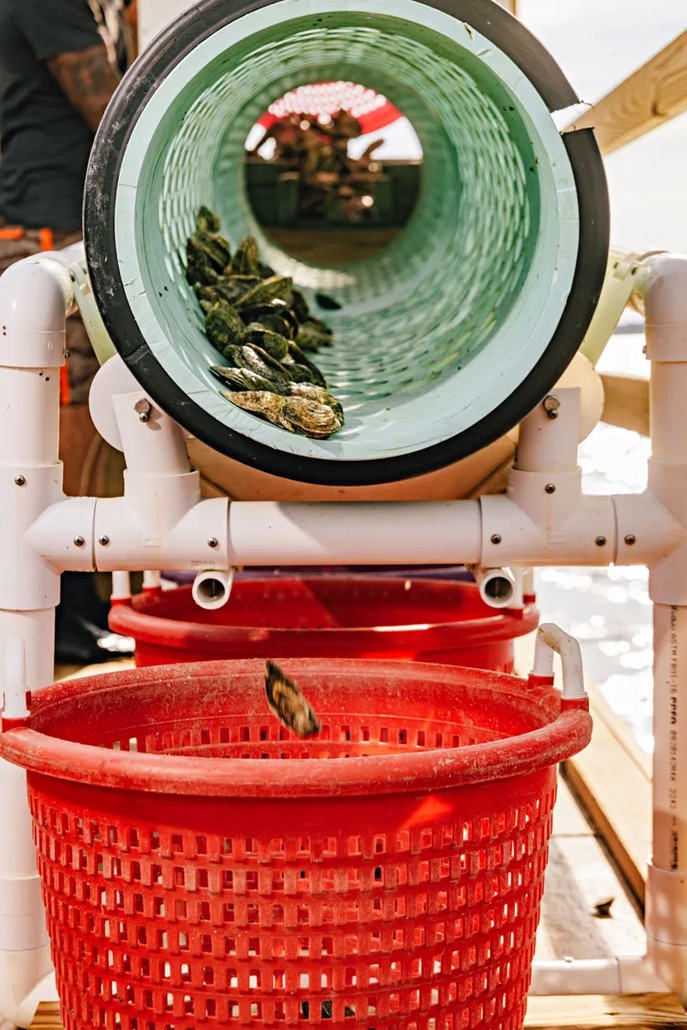
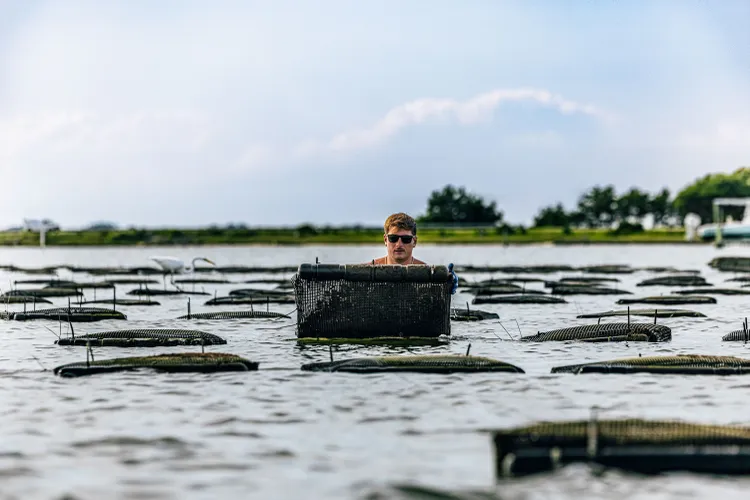
The oysters are raised from tiny “seeds” that are already in their shells. Dupuis and Cloutier place them 10,000 to a lot inside mesh bags that float on top of the water. As water filters in and out of the bags, the bivalves feed on phytoplankton. After about a month, they’re divided into more bags to lower the density and allow room for growth. The process repeats several times until they reach market size (around 3 inches), which usually takes about 8 to 12 months. Then they can be sorted, rinsed, and made ready to sell.
Credit: Baxter Miller
Like wine terroir, the taste is largely dependent on the water they are taken from. “Merroir,” as some oyster farmers call it, determines how briny, vegetal, or buttery the final product will be. “We’re very fortunate with the nutrients of the North River,” Dupuis says. “We have high-salinity oysters with a really buttery and vegetal flavor.”
Food distributors in the area have caught on to their magic. You can find Seashore’s “Frenchies” oysters (a nickname borrowed from Cloutier’s childhood) at restaurants and seafood markets locally and in cities as far away as Myrtle Beach and Charlotte. After their first harvest in 2024, the company sold 100,000 oysters, and they’ve been able to increase their production every year since. By 2030, they hope to sell a million. Regardless of how the business grows, her primary goal is to do it all alongside her family. “I love working with my children, and I’m hoping to create a long-term legacy for them,” Dupuis says. “Maybe 50 years from now, the ‘Frenchies’ will be everywhere and people will be like, ‘It’s this little woman who started it with her son.’ That’s what I’m working toward every day.”
Shucking School
Learn the ins and outs of oystering on a tour of the farm
“I like to educate people and make sure they understand that oystering is natural and a need for the region,” Dupuis says. “It’s better for the ecosystem, it’s sustainable, and it’s helpful to the environment and other species.” That’s part of what she and Cloutier share with guests on their farm tours, which are offered from mid-April through October.
Credit: Baxter Miller
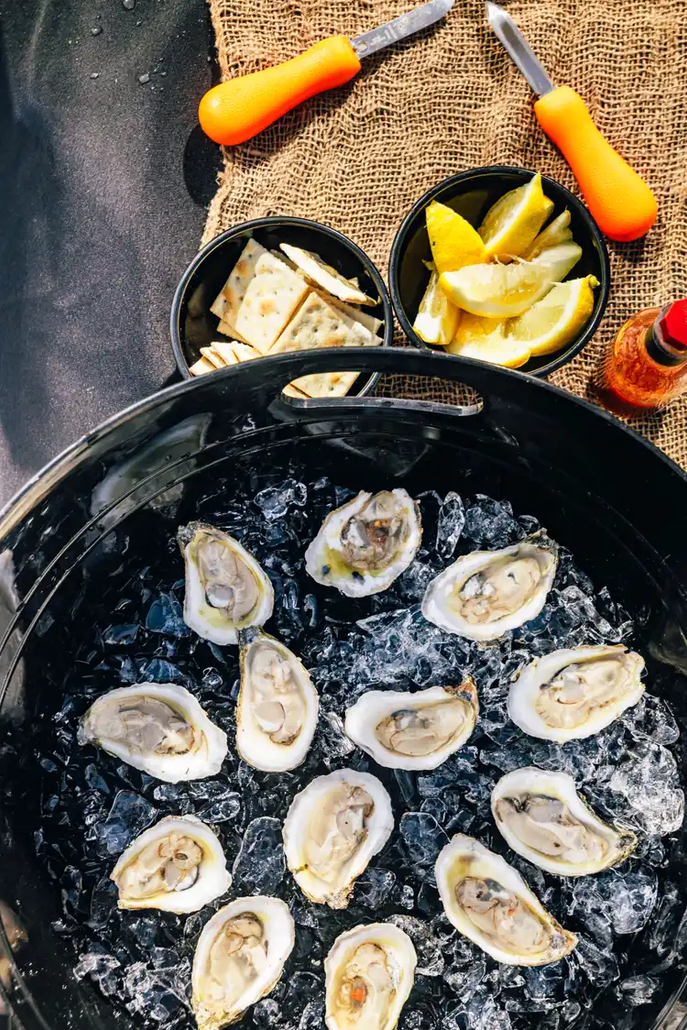
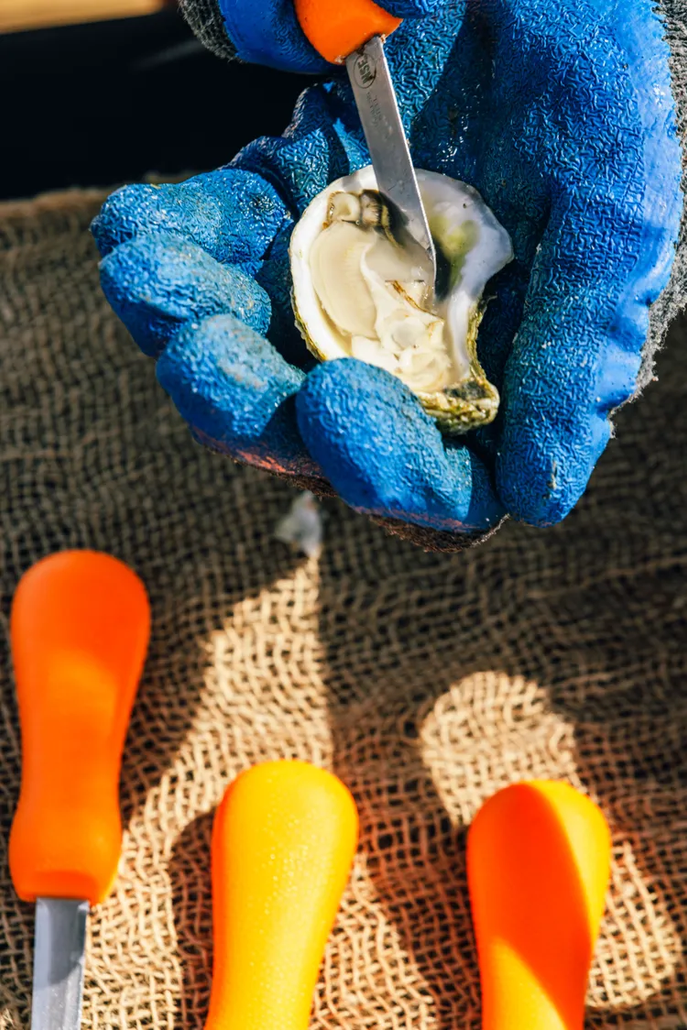
The 2.5-hour excursions begin in Beaufort with a 30-minute boat ride to the farm, during which Cloutier gives general information on oystering. Once you arrive, you’ll see it all firsthand and get to test your skills at shucking too. Afterward, you can buy fresh oysters to take home and get Dupuis’ tips on how best to serve them—she might even pass along one of her signature mignonette recipes (at far right).
Nancy Dupuis’ Raspberry Mignonette
Active time: 10 min. Total: 40 min. Serves 12
Process 3/4 cup fresh raspberries, 1/4 cup apple cider vinegar, 1 Tbsp. finely chopped shallot, 1 to 2 tsp. chopped fresh mint, 1 to 2 tsp. pure maple syrup, 1/8 tsp. fine sea salt, and 1/8 tsp. black pepper in a blender until smooth, 10 to 15 seconds. Transfer to a small bowl, and stir in 2 Tbsp. brut Champagne. Cover and chill until cold, about 30 minutes. Serve with oysters on the half shell and flutes of Champagne.